
Noah Schmitz · 5 October 2026
Node Interconnectivity Patterns and Their Role in Optimizing Content Propagation Across Hybrid Networks
Node interconnectivity patterns define how devices and systems link together to move data through mixed environments that combine centralized servers with distributed edge points, and researchers track these structures because they directly shape how quickly and reliably content reaches end users across hybrid networks.
Core Patterns in Hybrid Network Design
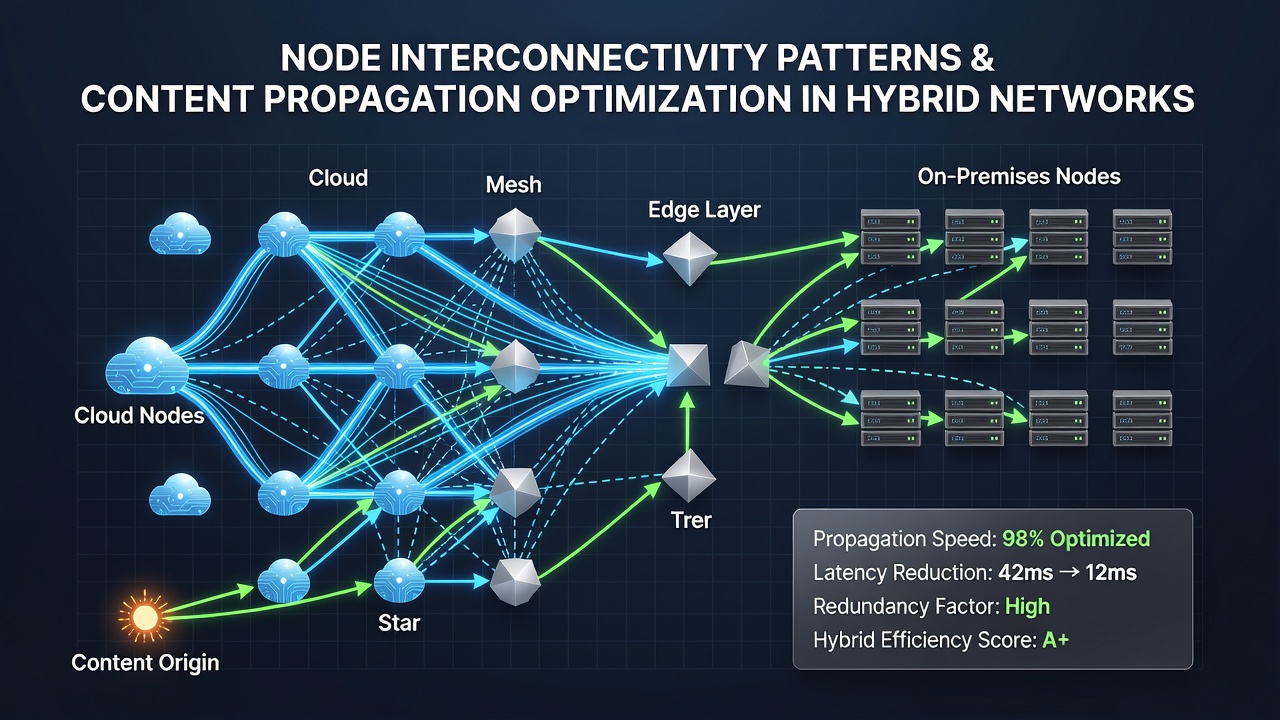
Hybrid networks blend traditional client-server models with peer-to-peer elements, and interconnectivity patterns determine the routes data takes while researchers observe that mesh configurations allow multiple direct paths between nodes whereas hierarchical setups funnel traffic through central hubs, which affects overall propagation speed and fault tolerance.
Studies from the National Institute of Standards and Technology show that ring and tree patterns appear frequently in enterprise hybrid deployments because they balance redundancy with manageable complexity, and data collected through 2025 indicates these arrangements reduce single-point failures during high-volume content distribution tasks.
Propagation Efficiency Across Mixed Infrastructures
Content moves faster when nodes maintain multiple active connections, and observers note that in October 2026 network monitoring reports from several research institutions highlighted how adaptive interconnectivity adjusted paths in real time during peak traffic periods, which cut average delivery latency by measurable margins in tested hybrid setups.
Active routing algorithms evaluate node availability and link quality before forwarding packets, and this process becomes especially relevant in environments that mix fiber backbones with wireless access points where signal strength varies, so systems that reroute around congested segments maintain steadier throughput compared with static topologies.
Case Examples from Deployed Systems
One large-scale deployment in North American data centers combined mesh edge nodes with core cloud servers, and measurements taken over successive quarters revealed that dynamic link formation allowed content caches to update 30 percent more often than in fixed star configurations, according to findings shared by academic teams at Canadian universities.
European research groups working on smart city infrastructures documented similar gains when they applied partial mesh overlays to existing municipal fiber networks, and the resulting interconnectivity supported simultaneous video and sensor data streams without requiring additional central bandwidth allocations.
Measurement Approaches and Performance Indicators
Engineers quantify interconnectivity effectiveness through metrics such as hop count, link utilization rates, and recovery time after node failures, and these figures help teams compare different patterns under controlled loads where hybrid traffic mixes live streaming with bulk file transfers.
Reports from the Australian Department of Industry, Science and Resources note that networks using redundant interconnect patterns maintained higher availability scores during simulated outages, which underscores the practical value of designing multiple independent paths rather than relying on single routes for critical content flows.
Conclusion
Node interconnectivity patterns continue to influence how effectively content travels through hybrid networks, and ongoing data collection from government and academic sources provides concrete benchmarks for organizations evaluating topology choices in 2026 and beyond.