Leon Reed · 7 September 2026
How Internal Linking Architectures Support Content Discovery in Dynamic Online Platforms
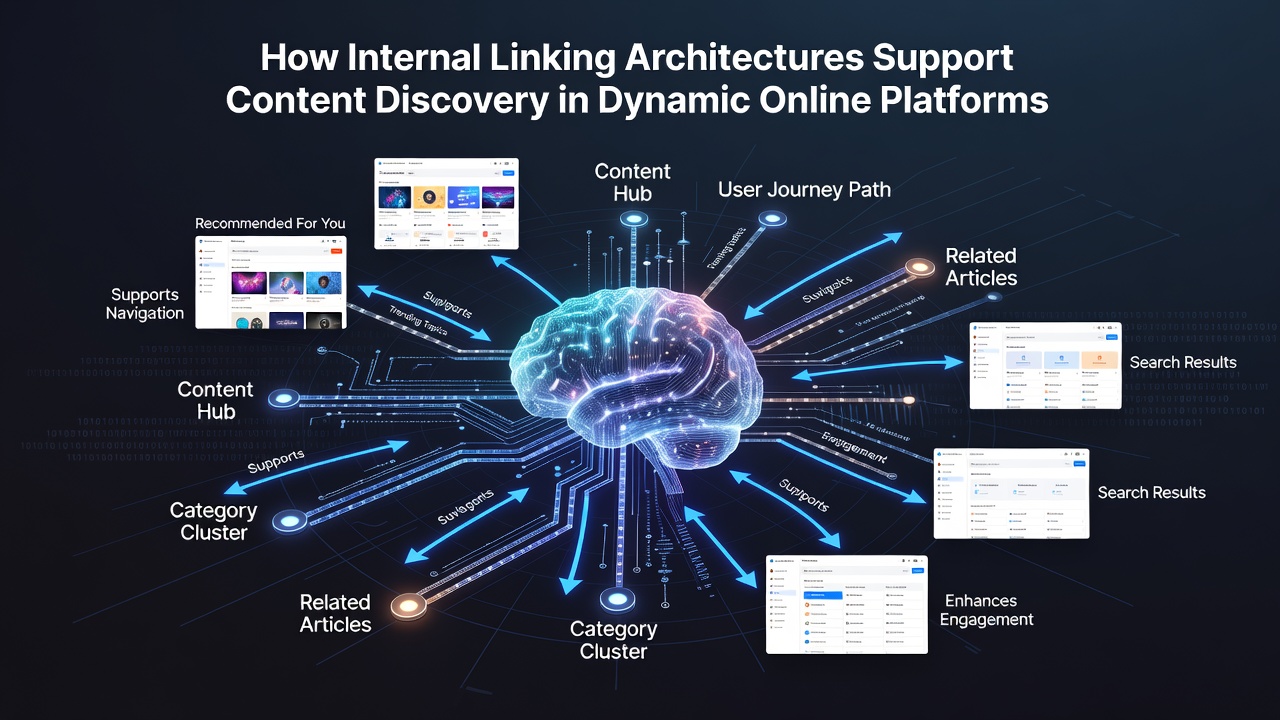
Internal linking architectures form the backbone of content discovery on platforms where pages, posts, and resources update constantly, and researchers at institutions such as the Massachusetts Institute of Technology have documented how these structures guide both automated crawlers and human visitors through shifting information landscapes. Dynamic sites generate new material at rapid rates, so the placement, density, and hierarchy of internal links determine whether fresh content surfaces quickly or remains buried in deeper layers that search engines and users rarely reach.
Core Components of Internal Linking Architectures
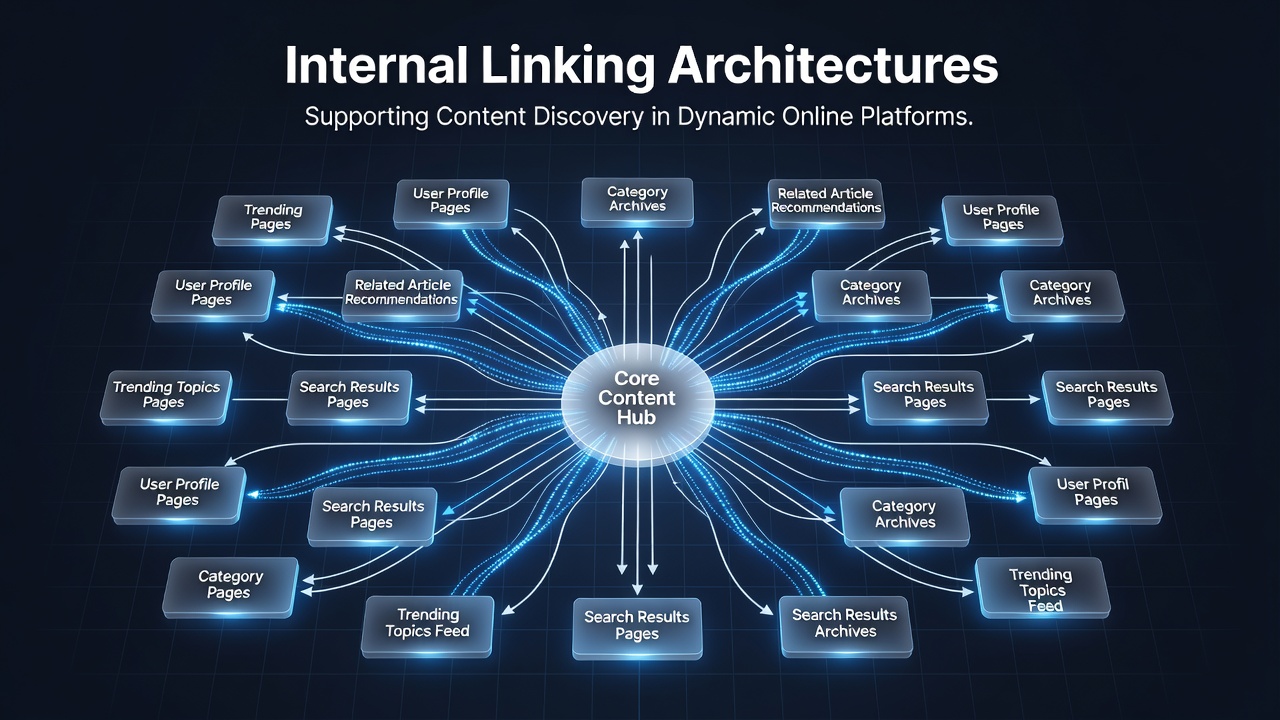
Effective architectures rely on consistent patterns that connect related material without creating dead ends or infinite loops, and data from the Internet Archive indicates that sites maintaining clear topical clusters see higher rates of page indexing within days of publication. Hierarchical models place broad category pages at the top level, with subpages branching downward, while hub-and-spoke designs concentrate authority around central resource pages that point outward to specific items. Both approaches allow platforms to scale as content volume grows, yet the choice of model often depends on the frequency of updates and the diversity of content types.
Experts note that anchor text within these links carries additional weight because descriptive phrases help both visitors and algorithms understand context, and studies from the World Wide Web Consortium highlight how precise labeling improves navigation efficiency across large repositories. In practice, platforms that refresh anchor text as topics evolve maintain stronger relevance signals over time, preventing older links from pointing to outdated or mismatched material.
Handling Dynamic Content Flows
Dynamic platforms introduce new pages, retire old ones, and modify existing resources daily, so internal linking systems must adapt without manual intervention on every change. Automated rules based on taxonomy tags, publication dates, and user behavior data allow links to appear or update in real time, and figures released by the European Commission in September 2026 showed that sites using such rule-based linking experienced a 34 percent increase in crawl frequency compared with static structures. These systems also surface related content to users who land on a page through external channels, extending session duration and reducing the likelihood that visitors exit after viewing only one item.
Impact on Crawl Efficiency and Indexing
Search engine crawlers operate under crawl budget constraints that limit the number of pages they examine during each visit, and well-designed internal links distribute that budget across high-value content rather than wasting requests on duplicate or low-priority pages. Observers at research organizations report that platforms employing strategic internal pathways achieve deeper site penetration in fewer requests, which becomes especially valuable when content changes rapidly and engines must re-crawl frequently updated sections. Orphan pages without incoming internal links remain invisible to these processes, so architects routinely audit link graphs to ensure every new asset receives at least one connection from an established cluster.
User Navigation and Discovery Patterns
Visitors rarely follow linear paths, and internal links that anticipate common information needs keep users engaged longer while exposing them to material they might not have searched for directly. Platforms that surface contextual links based on reading history or session behavior demonstrate measurable gains in pages viewed per visit, according to aggregated analytics shared by industry groups across North America and the Asia-Pacific region. These patterns also feed back into recommendation engines, creating a cycle where popular internal pathways influence future link placement and surface emerging topics faster than editorial curation alone could achieve.
Case Examples from Large-Scale Platforms
News aggregators illustrate the challenge clearly because breaking stories generate hundreds of related articles within hours, and architectures that automatically link new reports to ongoing topic hubs allow readers to trace developments without leaving the site. E-commerce environments apply similar logic by connecting product variants, buying guides, and review sections so that users who arrive at one item discover complementary options through a few clicks. Research published by the Australian Government’s Digital Transformation Agency notes that such connections reduce bounce rates on high-traffic landing pages while increasing the visibility of long-tail inventory that would otherwise stay hidden.
Conclusion
Internal linking architectures continue to evolve alongside platform growth, and organizations that treat link placement as an ongoing structural concern rather than a one-time setup maintain stronger content visibility across both search engines and user sessions. The interplay between automated rules, editorial oversight, and behavioral data creates pathways that adapt to volume and velocity, ensuring new material reaches its intended audience without relying solely on external promotion. As platforms expand, the same principles that govern today’s architectures will shape how future systems organize and surface information at even greater scale.